



(Last updated June 26, 2026)
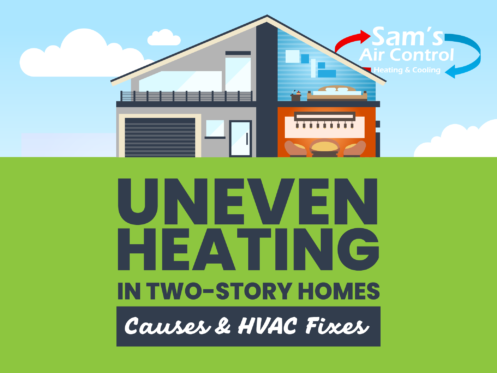
At Sam’s Air Control, uneven heating or cooling in two-story homes is among the most common comfort concerns we hear from homeowners. When one area is comfortable while others are uncomfortably hot or cold, it can affect your comfort and may indicate underlying issues. Understanding why the upstairs is colder than the downstairs in winter helps homeowners make informed decisions about comfort, efficiency, and HVAC upgrades. Explore the causes of uneven heating and learn how upgrading to a dual-zone HVAC system helped one family improve comfort and lower energy bills.
Key Points
- Uneven heating or cooling in two-story houses often results from improper HVAC system sizing, thermostat problems, ductwork design, and insulation.
- Hot air rises, but drafty attics and roofs can cause it to escape, drawing in cold air.
- DIY fixes such as sealing window and door leaks, replacing air filters, and using ceiling fans strategically help even out heating.
Why Two-Story Homes Often Have Uneven Heating or Cooling
Many homeowners experience uneven temperatures across the levels of their homes due to the principles of thermodynamics, which describe how heat transfers. Hot air is less dense than cold air and rises, while cold air is denser and sinks.
Two-story homes with persistently uneven temperatures are likely experiencing the stack effect, in which hot air rises to higher levels and escapes through gaps in the attic or walls, and the resulting pressure difference creates a vacuum that draws in cold air from outside at the first story. Two-story homes also place greater demands on forced-air HVAC systems because heat must travel further.
If you have a single thermostat that controls heating across your entire home, it can only measure temperatures from its location. Improper thermostat placement, such as near sun-exposed windows, leaky doors, or heat-producing appliances, can further prevent accurate temperature readings.
Common Reasons the Upstairs Is Colder Than Downstairs in Winter
Although thermodynamics dictate that hot air should rise to upper levels and keep them warm, certain factors can disrupt this process and cause your upstairs to feel colder than downstairs. Common causes include:
- Poor insulation and air sealing: Heat that rises into the upper level escapes quickly through under-insulated attics, ceilings, and exterior walls, allowing cold air to replace it and cool the space faster than the system can recover.
- Imbalanced ductwork: Ductwork with poor layouts or sizing causes airflow imbalances and prevents hot air from circulating efficiently to upper levels, especially during colder weather.
- Leaky or damaged ductwork: Gaps, disconnected sections, or poorly sealed joints allow heated air to escape rather than travel upstairs.
- Improper heating equipment sizing: A furnace or heat pump that doesn’t match the home’s heating load may cycle too frequently or struggle to maintain steady output, limiting the amount of heat reaching second-story spaces.
- Too few, blocked, or poorly placed vents: If you have too few vents on your second story, or they’re blocked or poorly placed, your heating system may not deliver heat evenly.
Recommended Winter Thermostat Settings for a Two-Story House
Many homeowners respond to uneven heating by setting their thermostats far higher than necessary. To maintain comfortable temperatures and improve energy efficiency, the Department of Energy (DOE) recommends setting the thermostat between 68°F and 70°F when you’re awake and home, then lowering it by 7°F to 10°F while asleep or away. If you have different thermostats for each level of your home or different zones, set your upstairs temperature about 2°F warmer.
A common misunderstanding is that setting the thermostat back makes heating equipment work harder later. Because thermodynamics drives heat to flow toward colder areas until temperatures equalize, larger temperature differences accelerate heat loss. By maintaining moderate indoor temperatures, your home loses heat more gradually, allowing it to distribute more evenly across floors.
What Homeowners Can Try First (Simple DIY Fixes)
Homeowners can try several simple troubleshooting strategies to address uneven heating. These DIY fixes may help to improve airflow and heating efficiency:
- Seal window and door leaks: Use weatherstripping or door sweeps to reduce cold air infiltration.
- Upgrade to a smart thermostat: Preset temperature settings and automated adjustments keep temperatures steady while preventing manual overcorrections.
- Add remote temperature sensors: Use sensors that integrate with smart home thermostats to help your system respond to heating needs throughout your home.
- Use ceiling fans strategically: Set fans to run clockwise at low speed in winter to push warm air down from the ceiling.
- Close or open blinds: Manage solar heat gains by letting sunlight warm rooms during the day, then close coverings at night to reduce heat losses through windows.
- Replace air filters: Clean air filters prevent dust buildup on components and improve airflow, reducing strain and increasing efficiency.
- Repair minor ductwork damage: Seal minor ductwork gaps with HVAC foil tape.
- Schedule regular HVAC maintenance: Seasonal heating system inspections and tune-ups help ensure your equipment continues to operate at peak efficiency.
Professional Solutions for Persistent Uneven Heating
If DIY fixes or routine maintenance don’t resolve uneven heating, professional solutions can address more complex underlying challenges.
Ductwork repairs and modifications
Professional duct inspections may uncover pressure imbalances, leaks, and poor layouts. Solutions such as adjusting dampers, modifying duct runs, or repairing damage improve airflow and heat distribution.
Invest in variable-speed technology
Variable-speed heat pump or furnace systems adjust blower motor speed gradually rather than delivering short, powerful bursts to match shifting heating demand. Similarly, high-efficiency furnaces are available with two-speed and multi-stage functions that adjust fuel usage to match conditions.
Upgrade insulation
Insulation improvements reduce heat loss through attics, walls, ceilings, and floors and help regulate the stack effect. Proper insulation also helps manage humidity, keeping spaces warmer.
Install mini-splits
In areas where ducted heat can’t reach, ductless mini-split systems provide energy-efficient heating with built-in zoning. With multiple indoor heads, mini-split systems don’t require ductwork and can operate independently or as part of a hybrid heating system to deliver targeted heating.
How We Solved Uneven Temperature With Custom Multi-Zone HVAC Installation in Metuchen, NJ
We spoke with a new customer who asked how to resolve uneven temperatures in their older two-story home. They found that no matter how high they turned up the heat or cranked the AC, their upstairs rooms were still too cold in the winter, and too warm in the summer.
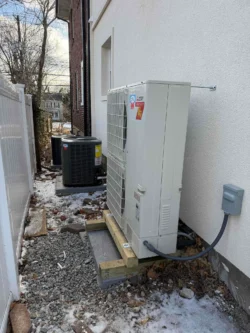
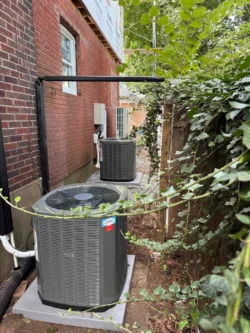
After an in-home inspection and estimate, we discovered that the issue was with the current heater setup. They had a single boiler to heat the entire house and a central air-conditioning system that was insufficient for their needs. After careful consideration, we discussed upgrading their system to a dual-zone HVAC system, which splits the home into different heating and cooling zones, each with its own thermostat.
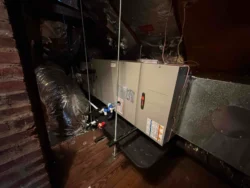
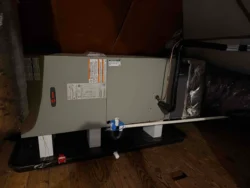
What we installed
Once we consulted with the client and discussed the differences between ductless ACs and central air, the client opted for a new custom multi-zone HVAC system. This included new furnace and AC installation, as well as our professional ductwork services with customized zoning dampers. We also installed new smart thermostats to automate their home’s comfort.
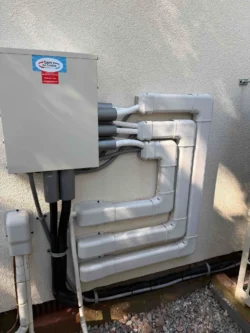
Cost of the project
With customized ductwork upgrades, a new HVAC system, and smart thermostats, this project cost approximately $46,000. The upgrade was a significant upfront investment, but the homeowner felt the price was well worth the years of reliable heating and cooling, automated comfort, and energy savings.
Long-Term Benefits of Multi-Zone HVAC Installation
Installing a ducted or ductless HVAC system in your home comes with long-term benefits such as:
- Reduced equipment wear: Because the temperature control is targeted, the heater and air conditioner won’t have to work as hard to meet your needs.
- Lower monthly utility bills: These systems condition only the air in rooms in use, saving energy and reducing your monthly energy costs.
- Consistent, personalized comfort: Set your bedroom, kitchen, garage, basement, or any space to your desired temperature without disrupting the entire house’s balance.
Expected savings
Multi-zone systems only heat and cool the rooms you’re currently using, so you can avoid wasting energy on conditioning empty spaces. This could save you 20% to 30% on your household energy bills, or hundreds of dollars per year.
When To Call an HVAC Professional
Call an HVAC professional when you’re ready to try advanced solutions for even heating. Certified professionals provide expert assessments of your home’s heating needs and develop repair or upgrade plans to restore energy efficiency. In addition to uneven heating, other concerns may also warrant calling an HVAC professional:
- Strange noises or smells from HVAC/heating equipment
- Frequent cycling or continuous heating cycles
- High energy bills
- Leaking or damaged ductwork
- The system won’t start
Get Reliable Heating With Sam’s Air Control
At Sam’s Air Control, we combine local experience, technical expertise, and lasting solutions to provide homeowners in Central Jersey with even, energy-efficient heating. Contact us at Sam’s Air Control to schedule a professional evaluation.
