


Edison has many older homes still equipped with oil heating systems. While these systems were once common, many no longer align with the comfort, efficiency, and cost expectations of modern households. Learn how we helped a local homeowner make the switch with a custom oil-to-gas heat conversion.
Quick Overview
We met with a customer who had a two-story Edison home with an oil-fired boiler installed in 1953. Winters in North Jersey bring freezing temperatures and snow, so this heating system carries a heavy workload for several months each year. Our customer was experiencing the strain of poor heating distribution and high winter bills associated with the high and volatile cost of oil. Additionally, older oil-fired equipment often suffers from poor efficiency, costly replacement parts, and increasing maintenance needs.
The goal was to transition away from oil to natural gas as quickly as possible before winter to satisfy their heating and hot water needs while improving efficiency, comfort, and long-term operating costs.
How we solved the problem
The customer called our team to inquire about oil-to-gas heat conversion, and we completed an in-home estimate the next day to determine the correct size and BTU capacity. This estimate also factored in gas connection needs, environmental standards, and other details. An oil-to-gas conversion plan must account for heating needs across the cold stretches, windy days, and temperature swings that occur in Edison.
After the necessary permits were obtained to comply with Edison building codes, we removed the oil boiler and its associated equipment. We replaced it with a natural gas boiler, installing and configuring new gas lines, electrical, and piping.
What Our Technicians Installed
For this project, we replaced the outdated oil-fired boiler with a natural gas system that matched the customer’s goals and their home’s needs with the appropriate efficiency, capacity, and long-term reliability.
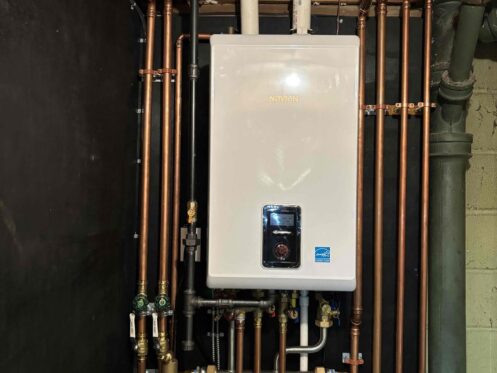
The Navien NCB-250/150H high-efficiency condensing combi boiler was the right match for this job. With a 95% AFUE rating and a 150,000 BTU output, this tankless model provides top-end efficiency for effective space heating and on-demand domestic hot water in a single unit. This model also features a compact design that allows our technicians to mount it on the homeowner’s wall and free up space. This model includes several other premium features:
- Smart controls with an LCD display and a quick dial wheel.
- Stainless steel dual condensing heat exchangers that recover heat from exhaust gases.
- 15:1 hot water and 11:1 heating turndown ratio for high efficiency and precise control.
- Vent Installation Detector (VID) for additional protection against exhaust leaks.
In addition to the boiler, our technicians installed a 15-foot gas line from the meter to the unit. We installed a dedicated electrical outlet to support the boiler’s operation and controls, as well as two Taco 007 circulator pumps for proper water flow through the hot water lines and hydronic heating equipment. We completed all required hydronic piping and tested the system connections. The customer was responsible for arranging oil tank removal.
Cost of the Project
The final installed price for this custom oil-to-gas boiler conversion was approximately $15,000. While this custom project is a significant investment, the customer noted that our estimate was more affordable by thousands of dollars compared to similar projects proposed by other contractors. Combined with our team’s precise installation and professionalism, our customer noted that he’s very satisfied with the result and value of the project.
In New Jersey, oil-to-gas conversions vary, depending on factors such as:
- Installing gas lines from the meter
- Install gas lines within your home
- Permit requirements
- The cost of the new gas furnace or boiler
For this project, the selection of a high-efficiency combi boiler added upfront value through efficiency and system consolidation. Gas line routing from the meter, electrical upgrades, added circulator pumps, and repiping also contributed to labor and equipment costs. We also offer financing options to help homeowners convert to gas with manageable monthly payments.
Expected long-term savings from switching from oil to gas heat
Natural gas heating costs in New Jersey are typically lower and more stable than heating oil. According to data from the Energy Information Administration (EIA), homeowners with oil-fired heating may spend approximately $1,390 for heating over winter. In comparison, those who switch to natural gas pay an average of $642 — almost half the cost of heating oil, before accounting for improved unit AFUE ratings. These savings accumulate year after year and help offset the initial conversion investment.
Before & After Images of Oil-to-Gas Furnace Conversion
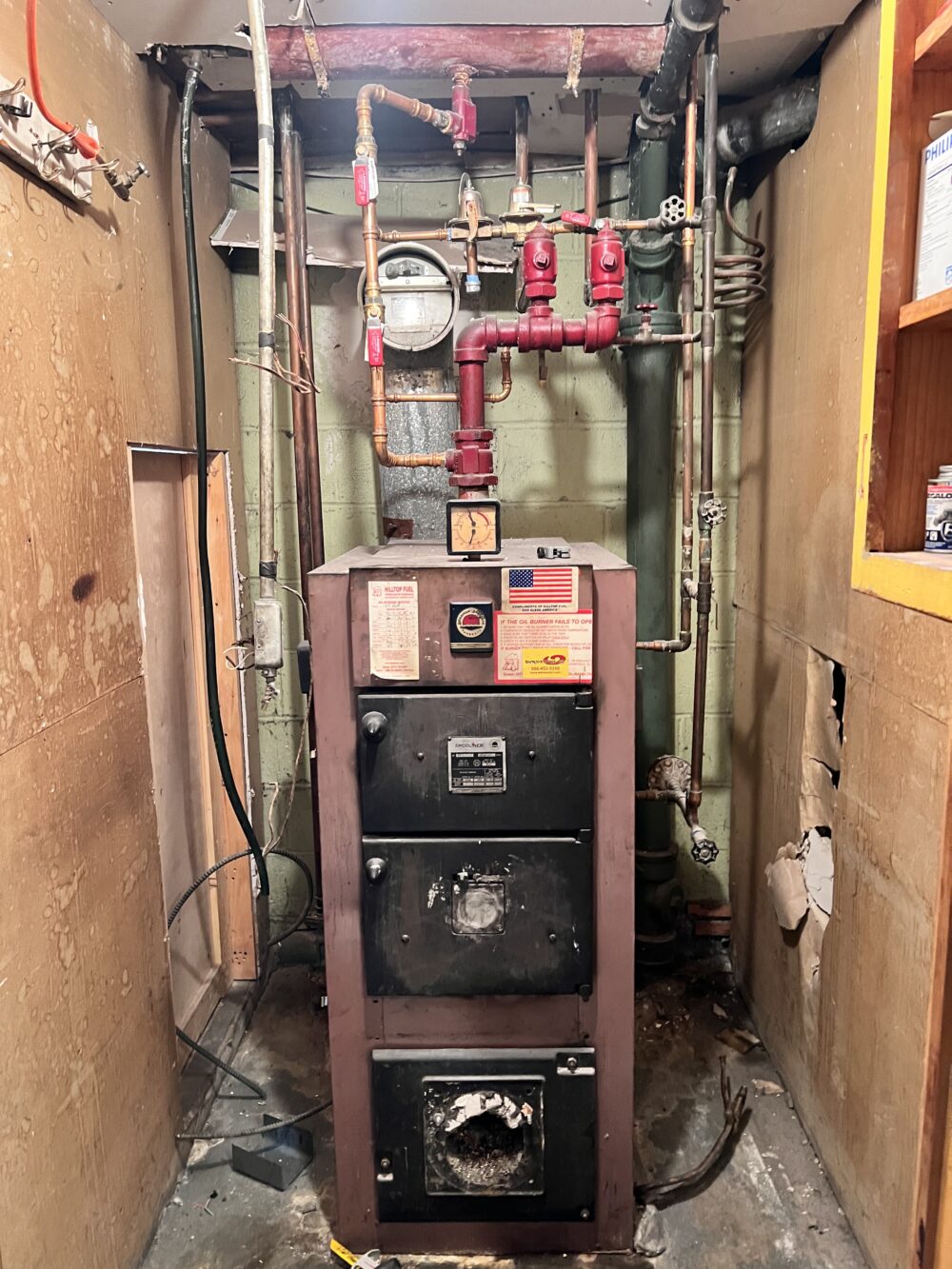
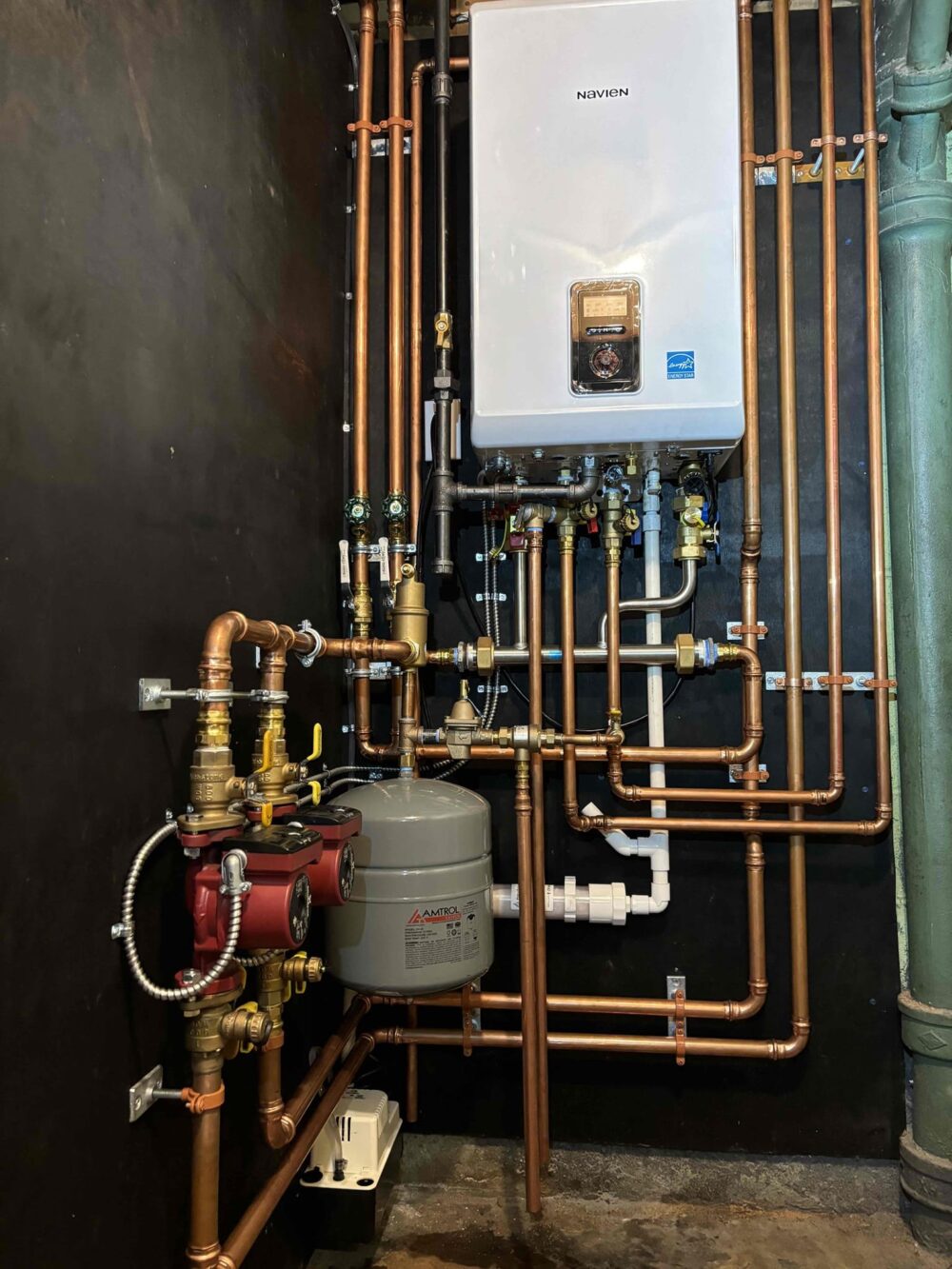
Before the conversion, the mechanical room housed the original oil boiler installed in 1953. After installation, the room features a wall-mounted Navien NCB-250/150H with a clean, organized piping arrangement reflecting our team’s careful workmanship.
Before
After
Long-Term Oil-to-Gas Furnace Conversion Benefits
Oil-to-gas boiler and furnace conversions offer advantageous changes for how homes handle space heating, hot water, and overall operation.
Long-term savings costs
Natural gas pricing is often lower per delivered unit of heat and more predictable than heating oil in New Jersey, so households that convert often enjoy less costly heating expenses each year. Homeowners may also qualify for rebates, tax credits, and utility incentives that offset total project costs, such as the HVAC Instant Rebates Program from PSE&G.
Energy-efficient technology
Boilers and furnaces rated at 95% AFUE provide powerful output while achieving high efficiency, especially compared to older oil systems that typically operate between 70 and 80% or sometimes as low as 56%. Converting from an outdated oil unit to high-efficiency gas equipment therefore offers 39% more fuel efficiency and with greater cost savings and reduced greenhouse emissions.
Improved performance and comfort
High-efficiency natural gas heating systems regulate output to match heating demand and provide consistent heat distribution. Even in harsh winter conditions, these systems run smoothly and quietly.
Reliability and convenience
Natural gas heating systems are conveniently fueled by a gas line connected to the meter. With this continuous fueling, homeowners don’t have to deal with having an on-site oil tank or scheduling oil deliveries.
Call Sam’s Air Control to Switch to Natural Gas Heating
This oil-to-gas conversion in Edison reflects our expertise and experience with legacy oil systems and natural gas technology. From system design through installation, we focus on clear communication, precise workmanship, and long-term solutions for improved efficiency and comfort. Contact us at Sam’s Air Control to schedule an in-home evaluation and discuss your options for oil-to-gas conversions.
