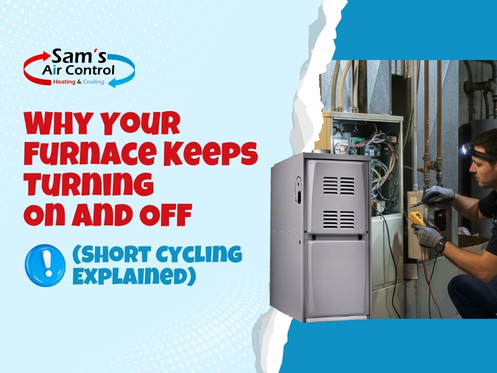
If your furnace keeps turning off and on every few minutes, you’re experiencing a phenomenon called short cycling. This problem wastes energy, drives up heating bills, and damages your HVAC system. Understanding common causes of short cycling helps you address the issue before it leads to costly repairs or a complete system failure.
Key Takeaways
- Short cycling wastes energy and shortens your furnace’s lifespan by forcing constant startups that strain mechanical components.
- Dirty filters, thermostat problems, and oversized equipment are the most common causes of short cycling Edison homeowners encounter.
- Simple troubleshooting, like checking filters and thermostat settings, can resolve some issues without professional help.
- Persistent short cycling requires professional diagnosis to prevent permanent damage to heat exchangers and other expensive components.
What Is Furnace Short Cycling?
Short cycling occurs when a heater runs and then shuts off before completing a full heating cycle. A typical furnace runs for approximately 10 to 15 minutes per cycle, cycling three to eight times per hour. A short cycling system runs for less than five minutes, then quickly restarts, often cycling much more frequently.
This pattern prevents efficient heating and creates massive strain on your equipment. The startup phase is the most stressful time for any furnace. Constant cycling can cut a typical furnace’s lifespan from 15 to 20 years down to 10 years or less.
Most Common Reasons a Furnace Keeps Turning Off and On
Our technicians see these issues most frequently when serving Central Jersey homeowners.
Dirty or clogged air filter
Blocked filters cause the heat exchanger to overheat rapidly. Your furnace detects the dangerous temperature and shuts down as a safety measure, then restarts when it cools. This creates the cycling pattern.
Edison homeowners need to change filters at least every three months, depending on usage. Homes with pets or high dust levels often need more frequent changes. A clogged filter reduces air quality and forces your system to work harder.
Thermostat problems
Faulty wiring, incorrect placement, or calibration issues send false signals to your furnace. A thermostat near a sunny window or heat source reads temperatures incorrectly, causing premature shutdowns.
Older thermostats lose calibration and can be off by several degrees. Sometimes, the issue is loose wiring or dying batteries. Programmable models can become stuck in unusual modes, leading to erratic heating.
Oversized furnace
When your HVAC system is too powerful for your home’s square footage, it heats the space too quickly. The thermostat registers the target temperature before the furnace completes its cycle, causing shutdown. The house then cools rapidly and triggers another short cycle.
This problem is common in older Edison properties where owners replace original equipment without proper sizing calculations. An oversized unit costs more, consumes more fuel, and wears out faster. Professional heating installation includes load calculations to match your home’s exact needs.
Flame sensor issues
The flame sensor confirms your gas furnace has ignited safely. When carbon buildup or corrosion coats this component, it can’t detect the flame properly. The furnace shuts down, thinking ignition failed, then restarts.
This issue is common in systems that haven’t received regular furnace maintenance. Professional cleaning can often restore proper operation, though severely corroded sensors require replacement.
Failing limit switch
The limit switch monitors furnace temperature and prevents dangerous overheating. When it malfunctions, it incorrectly signals that the system is too hot and triggers a shutdown. Minutes later, it resets and allows a restart, repeating the cycle.
Cracked heat exchanger
A cracked heat exchanger is both a cause of short cycling and a serious safety hazard. The heat exchanger transfers warmth from combustion gases to your home’s air. When cracks develop, your furnace may overheat and shut down repeatedly as a protective measure.
More importantly, cracks can allow dangerous carbon monoxide to leak into your home’s air supply. This invisible, odorless gas poses severe health risks. This problem requires immediate professional attention.
Ductwork and airflow restrictions
Leaky or blocked ductwork significantly impacts furnace performance. When heated air can’t flow properly, pressure builds up, and temperatures rise too quickly, triggering safety shutoffs. Our Edison ductwork services address such problems and restore proper airflow.
Refrigerant leaks
If you have a heat pump rather than a traditional gas or electric furnace, low refrigerant levels from a refrigerant leak can cause short cycling. Heat pumps rely on refrigerant to efficiently transfer heat. When levels drop, the system can’t maintain temperature and cycles repeatedly, struggling to keep up.
How To Troubleshoot a Furnace That Keeps Shutting Off
Try these simple checks before calling for professional furnace service:
- Check your air filter: Remove it and hold it to a light. If light can’t pass through, replace it immediately. Higher MERV ratings provide better filtration but can restrict airflow if your system isn’t designed for them.
- Examine thermostat settings: Confirm it’s set to “heat” mode and the temperature is at least five degrees above the current room temperature. Review the schedule on programmable models. Replace batteries if applicable.
- Check all vents and registers: Make sure supply vents are open and unobstructed throughout your home. Move furniture or curtains blocking airflow. Verify that return vents are also clear.
- Reset your furnace: Turn off the power switch near your unit, wait 30 seconds, and turn it back on. Check the circuit breaker to confirm it hasn’t tripped.
When To Call for HVAC Service
If the steps above don’t resolve the issue within 1 day, contact us for professional assistance. Continuing to operate a malfunctioning furnace can cause further damage. Other signs it’s time to call in pros include:
- If you smell gas or detect burning odors
- If you hear loud banging, screeching, or grinding noises
- If your carbon monoxide alarm sounds
- If you experience headaches, dizziness, nausea, or flu-like symptoms without fever
- If your system is over 10 years old
At Sam’s Air Control, we’ve served Central Jersey since 2014. Our licensed technicians can quickly diagnose why your furnace keeps shutting off and provide solutions without unnecessary repairs. We service all major brands, including American Standard, Goodman, and Mitsubishi Electric.
Stop Short Cycling Before It Stops Your Furnace
A furnace that keeps shutting off wastes energy, increases heating costs, and accelerates system wear. Most short cycling problems have straightforward solutions when addressed promptly.
Sam’s Air Control offers comprehensive heating services throughout Edison and Middlesex County. Our team is available 24/7 for emergencies with convenient online scheduling for routine service. Contact us today to schedule your service appointment and restore reliable heating.
Frequently Asked Questions
Why does my furnace keep turning on and off every few minutes?
Furnaces cycling every few minutes may have airflow restrictions from dirty filters, thermostat malfunctions, or sizing incompatibilities. Check your filter and contact a professional for help.
Can a bad thermostat cause short cycling?
Malfunctioning thermostats commonly cause short cycling. Problems with placement, calibration, wiring, or programming send incorrect signals, making your furnace turn on and off inappropriately.
Can a dirty filter cause my furnace to shut off?
Clogged filters are the leading cause of short cycling because they restrict airflow and cause overheating. Your furnace shuts down as a safety measure when temperatures get too high.
